The publication of “The Socialist”, the monthly digital magazine of the Socialist Lead of Sri Lanka and South Asia (SLLA), represents a politically significant development in the history of the revolutionary Marxist movement in South Asia. It marks a conscious assertion of the international revolutionary perspective of the International Committee of the Fourth International (ICFI) and a decisive break from the nationalist and opportunist practices that have undermined the development of the Trotskyist movement in Sri Lanka.
The central task confronting the SLLA is to struggle for the resolution of the crisis of revolutionary leadership of the working class in Sri Lanka and South Asia as part of the global fight waged by the ICFI. The launching of thesocialist.lk on March 11, 2023, was an initial step in developing a consistent Marxist analysis of political, economic, and cultural developments, and in educating workers and youth in the principles and program of world socialist revolution. Following the split in the SEP-Left in July 2024 and the expulsion of the nationalist faction that had abandoned the defense of Trotskyist principles and socialist internationalism, thesocialist.lk became the theoretical organ of the SLLA. The subsequent establishment of The Socialist magazine in October 2025 represents the further political and theoretical evolution of this work. As a development beyond the website, the magazine provides a structured, monthly forum for elaborating the perspectives of the ICFI, extending their reach among the urban working class, rural youth, and oppressed masses. It signifies not merely the continuation but the deepening of the fight to build revolutionary socialist leadership in Sri Lanka and South Asia, inseparably linked to the international struggle of the ICFI for world socialist revolution.
The Socialist is not simply a new publication. It represents the crystallization of an internationalist Marxist orientation rooted in the recognition that the fight for socialism in Sri Lanka and South Asia must be grounded in the global revolutionary strategy elaborated by the ICFI. It is the conscious effort of the SLLA to reestablish the Trotskyist political line—based on the historical lessons of the struggle against Pabloism and all forms of nationalist opportunism—and to intervene in the class struggle with theoretical clarity, class independence, and revolutionary optimism.
Historical Continuity: From the WSWS to The Socialist
The launching of The Socialist is historically and politically connected to the founding of the World Socialist Web Site (WSWS) by the ICFI in February 1998. As David North explained at the time, the WSWS was not merely a new publication but the product of profound theoretical and political clarification that emerged from the ICFI’s struggle against the opportunism of the Workers Revolutionary Party (WRP) in Britain.
The WSWS arose from the recognition that the globalization of capitalist production—the integration of the world economy into a single productive system—had rendered all nationally limited political programs reactionary and obsolete. The epoch of globalized capitalism required the building of a world party of socialist revolution, unified by a single international perspective and program, capable of leading the struggles of workers across all national boundaries. The traditional forms of printed party press, limited by the constraints of national distribution, were inadequate to this new historical stage. The Internet, as the most advanced means of global communication, provided the ICFI with a powerful instrument to reach, educate, and politically unify the international working class.
The decision of the SLLA to launch The Socialist as a digital magazine continues and extends this internationalist orientation. It expresses the determination to utilize the most advanced forms of communication to bring Marxist theory, historical analysis, and revolutionary strategy to the broadest layers of workers and youth—particularly those isolated from political education by material deprivation, linguistic barriers, and the decades-long betrayals of Stalinism, Maoism, and trade union bureaucracies.
The Political Meaning of the Digital Form
The digital PDF (portable document format) or other e-book format of The Socialist is not merely a technical convenience but corresponds to profound social and technological transformations. It is rooted in an understanding of the objective changes in the material conditions of communication and the class struggle.
Over the past decade, the spread of mobile Internet technology and smartphones has reached deep into Sri Lankan and South Asian society. Even in remote rural areas, millions—including working-class mothers, students, and rural youth—regularly access and share digital documents through WhatsApp and other social media platforms. Educational materials, government documents, newspapers and instant news are increasingly circulated in digital form. This represents not simply technological change but a transformation in the means by which information and ideas are disseminated and consciousness is formed.
This development provides the material foundation for the SLLA to bring the program of the ICFI directly to workers, rural youth, and the oppressed masses. The Socialist can be read and shared instantly by thousands, overcoming barriers of geography, poverty, workplace restrictions, and the limitations of traditional print distribution networks and high costs. It creates the possibility for the revolutionary program of the international working class to reach social layers that have been politically dominated for decades by bourgeois nationalism, Stalinist and Maoist parties, trade union bureaucracies, and communalist politics.
However, it must be emphasized that technology itself is not politically neutral, until it remains under the control of the bourgeoisie. The spread of digital communication is a product of capitalist development—an expression of the extraordinary productive forces created by human labor under capitalism. But these same forces, which hold immense progressive potential, remain imprisoned within the capitalist system, serving its interests. The revolutionary use of technology requires conscious political directions based on Marxist theory and the fight for the independent interests of the working class.
In this regard, The Socialist bears immense political significance: it harnesses modern technology under the guidance of the Trotskyist program to educate and mobilize the working class and oppressed masses for the socialist transformation of society. In doing so, it directly advances the SLLA’s central strategic task—the building of the Socialist Equality Party to resolve the crisis of revolutionary leadership—by forging a conscious revolutionary alliance between the urban working class and the rural youth, peasantry, and oppressed middle-class layers1 under the leadership of the proletariat.
The Crisis of Leadership and the Failure of the RCL/SEP
The launching of The Socialist must be situated within the historical experience of the the Socialist Equality Party and its predecessor the Revolutionary Communist League (RCL) —above all, their failure to build a genuinely mass revolutionary party rooted in the working class and capable of winning the rural youth and oppressed masses to the revolutionary socialist program of the international working class. This historical deficit, rooted in political retreats and opportunist adaptations, underscores the decisive importance of The Socialist as an instrument for reestablishing the Marxist foundations of the movement and preparing a new generation for the tasks of revolutionary leadership.
During the critical period of 1987–1990—marked by mass youth upheaval in the South, civil war in the North and East, and state terror —the RCL confronted a decisive test. Despite formally defending the international program of the ICFI, the party failed to develop the necessary political and organizational strategy to reach and win over the radicalized rural youth—both Sinhala and Tamil— and oppressed layers to the Trotskyist program.
This failure was not primarily a question of tactical errors or insufficient resources. It flowed from a deeper pragmatic adaptation to the framework of national politics and a fundamental skepticism regarding the revolutionary capacity of the working class and rural masses of Sri Lanka and South Asia as a region of backward countries—a retreat from Leon Trotsky’s theory of Permanent Revolution back toward the very Menshevik conceptions against which that theory had been elaborated. The practice of the party leadership revealed an effective abandonment of the perspective that the working class in a backward, belated capitalist country such as Sri Lanka could lead the democratic and socialist revolution, replacing it with a passive expectation that socialist revolution must first triumph in the advanced capitalist centers before the workers of Sri Lanka, India or Bangladesh, for instance, could seize power—a regression to the pre-1905 schema that Trotsky had decisively refuted through his analysis of combined and uneven development under imperialism.
The theory of Permanent Revolution, verified by the experiences of the Russian Revolution and subsequent struggles in colonial and semi-colonial countries, establishes that in countries of belated capitalist development, the democratic and national tasks historically associated with bourgeois revolutions cannot be achieved under the leadership of the national bourgeoisie. The bourgeoisie in such countries arrives on the historical stage too late, bound by a thousand threads to imperialism and terrified of the revolutionary mobilization of the working class and peasantry. Only the working class, leading the rural poor and oppressed masses, and linking the struggle for democratic rights to the fight for socialism on an international scale, can resolve the fundamental problems facing society.
The RCL’s failure to orient systematically toward the radicalized rural youth—both Sinhala and Tamil—flowed from an unprincipled adaptation to the nationalist political climate dominated by petty-bourgeois movements such as the Janatha Vimukthi Peramuna (JVP) in the South and the Liberation Tigers of Tamil Eelam (LTTE)2 in the North. The JVP, combining Sinhala chauvinism with violent hostility toward the working class, was able to build a mass base among disoriented and radicalized rural Sinhala youth precisely because the RCL had no sustained orientation or presence in these layers3. From 19834onward, Sri Lankan politics and the class struggle—both in the North and South—were increasingly dominated and mediated by the unresolved Tamil national question, which the bourgeoisie exploited to divide the working class, militarize society, and suppress independent proletarian struggle. In the North and East, the RCL’s initial sympathizing with the LTTE— under the opportunist patronage of the Workers Revolutionary Party (WRP), which pressured sections of the ICFI to adapt to bourgeois-nationalist movements—constituted a political betrayal of the Tamil youth. By endorsing the LTTE’s claim to represent a ‘liberation movement’ for national self-determination of Tamils, and supporting a separate Tamil Eelam, the RCL ceded the leadership of oppressed Tamil youth to a petty-bourgeois-nationalist organization, which fought for a bourgeois program. The WRP’s uncritical support for the LTTE prevented any examination by the RCL of the politics of the LTTE and other Tamil armed groups and thus helped to strengthen their influence among Tamil youth. Consequently, these political positions led to RCL’s failure to win Tamil youth of the North over to the revolutionary party, and, on the other hand, to earn the wrath of Sinhala rural youth of the South, who joined the JVP. In the early-1990s, the SEP leadership misleadingly claimed the ICFI’s rejection to support separatism—a 180-degree turn from the pre-1986 position—as an abandonment of the defence of the right of nations to ‘self-determination’, thus effectively refusing the essential content of this democratic right of the oppressed Tamil people. This further entrenched the loss of confidence of the Tamil youth, the poor and working people toward the SEP as a revolutionary party that could lead them to solve the national question.
This dual failure—its inability to penetrate the rural Sinhala youth and its capitulation to Tamil bourgeois nationalism—left the RCL unable to politically combat either the JVP or the LTTE, allowing both movements to fill the vacuum created by the RCL’s withdrawal from its revolutionary tasks. The consequences were bloody, and irrevocable. From the early 1990s onward, this crisis deepened, with SEP’s limited interventions—concentrated narrowly on the urban sections of the working class—being largely inadequate to gather a mass base in the working class. The traumatic legacy of JVP fascism and state terror, the massive global impact of the capitalist restoration in the Soviet Union, the protracted civil war that the bourgeoisie used to polarize the working class on communal lines, the rise of postmodern and anti-Marxist currents in academia that disoriented a generation of youth, the emergence and increasing influence of petty-bourgeois pseudo-left tendencies, and the consolidation of bourgeois nationalist and racialist parties over the rural masses and oppressed middle classes through electoral and parliamentary manoevers—all of these processes further isolated and demoralized the SEP leadership, leading to a lack of political confidence in the possibility of winning the working class and the oppressed middle-class youth to the program of Marxism, thereby accelerating its drift away from the mass movement of the working class and the oppressed5.
Historical legacy of petty-bourgeois radicalism and its pressure within the FI
This retreat of the RCL—and later the SEP—must be analyzed within the broader world-historical process that prepared the ground for revisionism within the Fourth International (FI) itself.
From the third decade of the twentieth century onward, the international working class suffered a series of catastrophic defeats arising from the betrayals of Social Democracy and Stalinism: the Social Democratic betrayal of August 1914, which drowned the German November Revolution of 1918-1919 in blood; the failure of the German revolution in 1923; the defeat of the British General Strike in 1926; the catastrophic betrayal of the Chinese Revolution in 1927; and above all, the coming to power of Hitler in January 1933—a defeat that signified the definitive transformation of Stalinism into a counterrevolutionary force and necessitated the founding of the Fourth International in 1938.
The post-World War II period witnessed the temporary restabilization of world capitalism through agreements reached at Yalta and Potsdam, the Marshall Plan, and the Bretton Woods system, which vastly expanded the field of operation for bourgeois nationalist movements and petty-bourgeois radical tendencies throughout the colonial world. Mao Zedong’s victory in China in 1949, achieved through peasant-based forces rather than the urban proletariat; the waves of decolonization bringing to power figures such as Nehru, Nasser, Sukarno, and Nkrumah; the Cuban Revolution of 1959, where Castro’s guerrilla movement nationalized industry without a Trotskyist party or the conscious mobilization of the working class; the Vietnamese defeat of French and American imperialism under Stalinist leadership; and the proliferation of guerrilla movements throughout Latin America, Africa, and Asia—all commanded enormous authority among radicalized workers, youth, and intellectuals, creating the illusion that socialism could be achieved through non-proletarian forces and rendering the Fourth International’s patient work of building revolutionary parties apparently sectarian and obsolete.
It was precisely this political climate that generated revisionist pressures within the Fourth International, culminating in Pabloism, which, as David North explains in The Heritage We Defend, represented “liquidationism all down the line”—the repudiation of the hegemony of the proletariat and the reduction of the Fourth International to a pressure group within Stalinist, Social Democratic, and bourgeois nationalist organizations, proclaiming that these forces would be compelled by objective circumstances to play a revolutionary role. The 1953 split led to the founding of the International Committee of the Fourth International (ICFI) under James P. Cannon’s leadership in defense of orthodox Trotskyism.
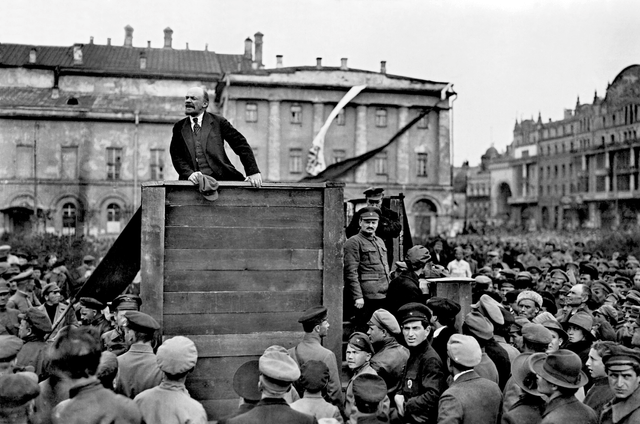
Although the International Committee waged a principled and historically vindicated struggle against Pabloite liquidationism, defending the theoretical and programmatic foundations of Trotskyism and insisting on the necessity of building independent revolutionary parties of the working class, individual sections within the ICFI— the Socialist Workers Party (SWP) of the United States, which capitulated to Pabloism a decade later, reunifying with the Pabloites in 1963 on the basis of glorifying Castroism and thereby repudiating the entire historical and theoretical conception of socialist revolution developed by Marx, Lenin, and Trotsky; the Revolutionary Communist League (RCL) and subsequently the Socialist Equality Party (SEP) in Sri Lanka, notwithstanding the political leaps forward achieved by the ICFI in a relentless and principled struggle against the betrayals of the opportunist leadership of the Workers Revolutionary Party (WRP) of Britain in late 1980s—proved vulnerable over time to the nationalist pressures and to the national consciousness of the working class and the petty-bourgeoisie, and resorted to practical adaptations to the existing political framework dominated by bourgeois and petty-bourgeois forces. This vulnerability manifested itself in RCL/SEP not through explicit programmatic revisionism—the party claimed to formally uphold the theory of Permanent Revolution and the Transitional Program—but rather through a growing disjuncture between the revolutionary principles embodied in official documents and the party’s concrete political practice and orientation.
The SEP leadership profoundly distorted the essential lessons drawn by the International Committee from its protracted struggle against the Workers Revolutionary Party’s national-opportunist degeneration. That struggle established that the political independence of the working class—the foundational principle of revolutionary Marxism reaffirmed through the battles against Pabloite liquidationism—demands the systematic construction of the revolutionary party as the conscious political leadership of the proletariat through active intervention in the class struggle, not the dissolution of that party into Stalinist, social democratic, or bourgeois nationalist formations. The WRP’s betrayal consisted precisely in the liquidation of independent revolutionary perspectives into adaptation to alien class forces: it subordinated sections of the Fourth International to bourgeois nationalist regimes in the Middle East and repudiated the theory of Permanent Revolution as the strategic foundation for building Trotskyist parties in the colonial and semi-colonial world. The SEP leadership, however, inverted the meaning of political independence. Where the WRP liquidated the party through opportunist alliances with non-proletarian forces, the SEP isolated the party from the working class and oppressed masses through sectarian abstention from the concrete work of party-building. They transformed political independence from a perspective demanding bold leadership in workers’ struggles—requiring systematic struggle to establish the party’s authority among workers, rural youth, plantation laborers, and the urban oppressed middle class through theoretical education combined with practical initiative in the class struggle—into a rationalization for passive propagandism divorced from systematic revolutionary work.
This gap between programmatic orthodoxy and revolutionary practice expressed itself in a retreat from the uncompromising struggle against Sinhala chauvinism, Tamil nationalism, and bureaucratic trade unionism within the workers’ movement; a failure to build the party as a genuine mass organization rooted in the factories, plantations, working-class neighborhoods, and among the radicalized rural and unemployed youth of both North and South; and an abandonment of the systematic application of the Transitional Program to the concrete conditions facing the Sri Lankan proletariat and oppressed masses. This sectarian deviation—manifesting as passive commentary upon events rather than fighting for active leadership within them—represented an opportunist adaptation to the immense pressure exerted by decades of bourgeois nationalist hegemony over the Sri Lankan masses and the apparent authority of the petty-bourgeois radical movements and trade unions. The distorted lessons rationalized the party’s retreat from its historical responsibility to forge the political alliance of the Sinhalese and Tamil working class and rural poor under the banner of international socialism, thereby abandoning the struggle to establish the political independence of the Sri Lankan proletariat from the influence of all variants of bourgeois and petty-bourgeois nationalism, and preparing the conditions for the party’s transformation into a propaganda circle incapable of leading the revolutionary struggles of the working class and oppressed rural toilers.
The Inverse form of National Opportunism of the RCL/SEP
The retreat from systematic work to build a mass revolutionary party among the rural youth and oppressed masses expressed, at its core, skepticism about the validity and applicability of the theory of Permanent Revolution to the conditions of Sri Lanka and South Asia. This erosion of perspective led not merely to tactical errors but to a profound strategic regression. In place of an active struggle to forge the political unity of the working class with the oppressed rural and middle layers under a single internationalist program, the leadership lapsed into passive propagandism—issuing programmatically orthodox statements in a ritualistic manner that substituted abstract formulations for concrete revolutionary practice—and thereby revealed a fundamentally sectarian character, divorcing Marxist theory and positions from its necessary embodiment in systematic intervention in the class struggle. The opportunist leadership which abandoned theoretical principles in practice, exposed its sectarian character by hiding behind theoretical orthodoxy, while refusing to engage in the concrete work of building the party among the masses.
Such a retreat constituted and opened the door to opportunist adaptations to the political environment dominated by bourgeois and petty-bourgeois forces—a tendency that can be referred to as the inverse form6 of national opportunism, a type of passive opportunism peculiar to the leadership of a revolutionary party of a country of belated capitalist development. In practice, it meant yielding the initiative to the very revisionist and nationalist tendencies—shaped by decades of Stalinist, Maoist, Pabloite, and petty-bourgeois radical betrayals—that had disoriented and fragmented the revolutionary movement internationally. By abandoning a determined and irreconcilable struggle to apply the theory of Permanent Revolution to the concrete conditions of Sri Lanka, the SEP leadership steadily isolated itself from the working class and the oppressed masses, forfeiting their political confidence and, thereby perpetuating its own stagnation and compounding its political degeneration and internal putrefaction.
The SEP’s inadequate intervention in working-class struggles— in the backdrop of growing intensification of class struggles in Sri Lanka and South Asia as part of an international phenomenon—flowed from its retreat from systematic struggle to build independent revolutionary organization in the factories, plantations, and workplaces. The trade union bureaucracy—controlled by bourgeois and reformist parties that subordinate workers to nationalist politics—functions as the organizational instrument through which the nationalist political climate dominates the working class. The SEP’s historical failure to build revolutionary alternatives—independent rank-and-file action committees— in the workplaces meant workers remained under the ideological and organizational stranglehold of these bureaucratic apparatuses, which systematically block unified, independent class action and reinforce reformist illusions and ethnic divisions. This is a further manifestation of inverse opportunism: not adaptation to the bureaucracy through collaboration, but accommodation to its dominance through the failure to wage patient, systematic revolutionary work among the workers themselves.
The Theoretical and Political Foundations of the SLLA
The SLLA was formed precisely to overcome this legacy of nationalist opportunism and political passivity. Its work is based on a return to the fundamental principles of Trotskyism—the theory of Permanent Revolution, proletarian internationalism, and the necessity of building the independent revolutionary party of the working class.
Central to this work is the understanding that the socialist revolution in Sri Lanka cannot be completed within a national framework. The Sri Lankan economy, like all economies in the epoch of imperialism, is integrated into the world capitalist system. The crises confronting workers and oppressed masses—economic collapse, social inequality, authoritarian rule—are manifestations of the global crisis of capitalism. Their resolution requires the international unity of the working class and the overthrow of capitalism on a world scale.
This means that the fight for socialism in Sri Lanka is inseparable from the struggles of workers in India, throughout South Asia, and internationally. It requires breaking the working class from all forms of nationalism—Sinhala, Tamil, or any other communal identity—and uniting workers across ethnic, religious, and national lines on the basis of common class interests.
It also requires forging a revolutionary alliance between the urban working class and the rural poor, agricultural workers, impoverished peasants, and oppressed middle-class layers. This is not a question of tailoring the socialist program to accommodate the prejudices or limited outlook of these layers, but of systematically explaining how their fundamental interests can only be achieved through socialist revolution led by the working class.
The rural masses in Sri Lanka and South Asia face deepening immiseration—landlessness, indebtedness, destruction of traditional livelihoods, and rural unemployment. These are not isolated “rural problems” but expressions of the crisis of world capitalism and the subordination of agriculture to the profit interests of agribusiness monopolies and imperialism. The solution lies not in nationalist or populist programs of land reform or rural development within capitalism, but in the socialist reorganization of agriculture as part of a rationally planned economy under workers’ control.
Similarly, educated youth from rural and small-town backgrounds—products of the expansion of public education who confront unemployment, poverty wages, and social dead-ends—represent a potentially revolutionary force. The recent Gen-Z protest movements testified to their revolutionary potential. Without the intervention of a revolutionary party armed with Marxist theory, this discontent and radicalism is channeled into reactionary nationalist, religious fundamentalist, or fascistic movements, as history has repeatedly demonstrated.
The SLLA’s orientation to these layers is not based on romantic glorification of the peasantry or petty-bourgeoisie—the hallmark of Maoist, populist, and Pabloite revisionism. It is based on sober Marxist analysis: these layers, objectively ruined by capitalism and incapable of independent political action, can play a progressive historical role only under the leadership of the working class and its revolutionary party, fighting for a socialist program.
The Socialist as an Instrument of Revolutionary Education
The Socialist is a central instrument in this political reorientation. By systematically disseminating the perspectives of the ICFI, historical analyses of past struggles, and Marxist analysis of contemporary political and economic developments, it aims to educate a new generation of revolutionary cadre and raise the political consciousness of broader layers of workers and youth.
The magazine’s digital format ensures that this material reaches precisely those layers the RCL and SEP failed to reach systematically—rural youth, oppressed middle-class layers, and workers isolated from traditional centers of political organization. Through The Socialist and theSocialist.lk the SLLA works to:
- Clarify the class nature of the economic and social crises confronting the masses and expose the bankruptcy of all nationalist, populist, and reformist solutions;
- Educate workers and youth in the historical lessons of the struggle for Trotskyism—particularly the fight against Pabloism and the defense of the theory of Permanent Revolution;
- Analyze contemporary political developments, mainly of Sri Lanka and other countries of South Asia, from the standpoint of the interests of the international working class;
- Counter the influence of bourgeois, Stalinist, and petty-bourgeois pseudo-left ideologies;
- Build political bridges between the revolutionary party (SEP) and the broader masses of the oppressed classes.
This is not propaganda in the abstract sense, divorced from the living class struggle. It is education combined with revolutionary intervention—the development of Marxist consciousness as an essential component of building the revolutionary party and preparing the working class for the seizure of power.
Technology, Artificial Intelligence, and Revolutionary Education
The rapid development of Internet technology and Artificial Intelligence (AI)—more accurately understood as augmented intelligence— presents both opportunities and challenges for the revolutionary movement. AI systems—products of collective human labor and scientific knowledge accumulated over generations—express the enormous productive capacities developed under capitalism. However, like all productive forces under capitalism, in the hands of the capitalist class, they exist in contradiction with the social relations of private property and are employed primarily for profit extraction, automate jobs to increase unemployment and drive down wages, conduct mass surveillance, and generate sophisticated propaganda. The tech monopolies that control AI development guard their systems as private property, extracting enormous profits while workers who produce the data and perform the labor that makes AI possible are driven into poverty.
For the revolutionary movement, advances in AI technology have opened a new epoch in revolutionary education, translation, archiving, international communication, and organization. These tools make possible the rapid translation of ICFI documents into multiple languages, support deep historical research and rigorous analysis, and vastly expand the capacity to disseminate Marxist literature to workers and youth across the globe.
However, the use of AI technology must be under the conscious direction and intervention of the revolutionary party, guided by Marxist theory, not subordinated to the logic of capitalist technology companies or based on techno-utopian illusions. The decisive factor is not the technology itself but the political program and class perspective that guides its use.
The SLLA’s use of digital publication for The Socialist is thus part of a broader Marxist approach: utilizing advanced productive forces developed by human labor to advance the consciousness and organization of the working class for the revolutionary transformation of society.
It is on this perspective that the SLLA welcomes the launch of “Socialism AI,” the artificial-intelligence platform developed by the ICFI as a decisive and enormous advance in the political education and intellectual arming of the international working class7.

Building the World Party: Internationalism in Practice
The Socialist must be understood as part of the world press of the International Committee of the Fourth International. Its initial publication in Sinhala is another important step in building the revolutionary press that transcends national and linguistic divisions. Future editions in Tamil and English will extend its reach throughout South Asia, strengthening the political unity of the working class across ethnic and national lines.
The fundamental principle remains that stated by Trotsky in ‘Open Letter for the Fourth International: To All Revolutionary Working-Class Organizations and Groups’ (1935): “Under all conditions, especially during a revolution, it is impermissible to turn one’s back upon the toilers for the sake of a bloc with the bourgeoisie. It is impossible to expect and demand that the duped and disillusioned masses will fly to take up arms upon the belated call of a party in which they have lost confidence. The proletarian revolution is not improvised by the orders of a bankrupt leadership. The revolution must be prepared through incessant and irreconcilable class struggle, which gains for the leadership the unshakable confidence of the party, fuses the vanguard with the entire class, and transforms the proletariat into the leader of all the exploited in the city and countryside.”
This means, in accordance with the theory of Permanent Revolution and its application to the conditions prevailing in Sri Lanka and throughout South Asia:
- Recognizing that in countries of belated capitalist development such as Sri Lanka, the bourgeoisie has demonstrated its absolute incapacity to resolve the fundamental democratic tasks—the national question, the agrarian/peasant/land question, and the establishment of genuine social and democratic rights. Only the working class, leading the oppressed rural masses, can achieve these historically necessary transformations, which must inevitably grow over into the socialist revolution.
- Rejecting categorically all conceptions of intermediate stages between bourgeois rule and the dictatorship of the proletariat. Between the Rajapaksa-Wickremesinghe regime and workers’ power, between the bankrupt programs of the JVP, Front Line Socialist Party (FSP) and pseudo-left, and the revolutionary Marxist program of the ICFI, there exists no middle ground. The alliance of the working class with the peasantry, the rural toilers and the oppressed middle-classes can be realized only through irreconcilable struggle against the influence of the national bourgeoisie and all forms of petty-bourgeois nationalism.
- Exposing the reactionary and historically exhausted character of all nationalist ideologies—Sinhala Buddhist chauvinism, Tamil nationalism, and every variety of communalism and identity politics—as programmes that subordinate the working class to rival factions of the capitalist class and imperialism, thereby blocking the path to the resolution of both the democratic and socialist tasks.
- Understanding that the democratic demands of the masses—for national equality, land reform, an end to autocratic rule, and social justice—cannot be separated from the struggle for socialist revolution. In the epoch of capitalist decay, democratic slogans, transitional demands, and the problems of the socialist revolution are not divided into separate historical epochs but stem directly from one another. The slogans for the democratic aspirations of the masses, must be indissolubly connected to the struggle for workers’ power and the expropriation of capitalist property.
- Forging the unity of Sri Lankan workers with Indian workers and the working class throughout South Asia and internationally, on the basis of a common revolutionary program. The tasks confronting the Sri Lankan working class—from resisting IMF austerity to defending democratic rights—are inseparable from the struggles of workers across the region against their own exploiters and the global system of imperialism.
- Building the Socialist Equality Party (Sri Lanka) and the sections of the ICFI throughout South Asia as genuine mass revolutionary parties—rooted in the working class, leading the rural masses and oppressed middle classes, armed with the programme of Permanent Revolution and the Transitional Programme—capable of leading the coming revolutionary struggles to victory under conditions of deepening imperialist crisis and intensifying class struggle.
The tens of thousands of youth who have recently demonstrated through the Aragalaya in Sri Lanka and similar mass movements in Bangladesh, Nepal and elsewhere their readiness to challenge corrupt regimes must be won to an understanding that their democratic and social aspirations can be realized only through the socialist revolution led by the working class. This requires the patient development of socialist consciousness through systematic political education, theoretical clarification, and the building of revolutionary organization—not capitulation to spontaneism, petty-bourgeois radicalism, or the illusion that the masses can achieve their aims without overthrowing capitalism and establishing the dictatorship of the proletariat.
A Return to Permanent Revolution
The launching of The Socialist marks a conscious political correction of the nationalist deviations that undermined the work of the RCL and SEP. It expresses renewed confidence in the revolutionary capacity of the working class and oppressed masses in these countries, based not on wishful thinking but on Marxist analysis of the objective crisis of world capitalism and the necessity of socialist revolution. The fight against the inverse form of national opportunism requires not simply an organizational turn to intense daily work in the class struggle, but first and foremost a definite and conscious return to the programme of permanent revolution and the principles upon which the Fourth International was founded.
By employing digital technology to overcome barriers between urban and rural, between different linguistic communities, between the working class and oppressed middle-class layers, the SLLA works to realize in practice the Marxist conception that socialist revolution is an international process uniting all oppressed layers under the leadership of the proletariat and its revolutionary party.
The Socialist, along with theSocialist.lk website, thus stands as both a theoretical and practical instrument in the fight to build the ICFI sections in South Asia, educate a new generation of Trotskyist cadre, and prepare the working class for the revolutionary struggles that will decide the future of humanity. It reaffirms the living continuity of Trotskyism in the twenty-first century and represents a decisive step forward in resolving the crisis of revolutionary leadership in Sri Lanka and South Asia.
Join SLLA! Build SEP!
- ICFI Political Chronology 1982-1991, A letter from David North to Keerthi Balasuriya, 25 September 1987. ↩︎
- “The LSSP’s degeneration had profound political consequences. By abandoning the struggle to unify workers on a socialist perspective, the LSSP left the working class and oppressed masses with no alternative to communalist politics and directly contributed to the rise of racially-based organisations—petty bourgeois formations such as the LTTE and the Sinhala chauvinist JVP in the south.” Wije Dias, ‘The Socialist Equality Party in Sri Lanka replies to a supporter of the Liberation Tigers of Tamil Eelam’, WSWS (29 September 2000) https://www.wsws.org/en/articles/2000/09/ltte-s29.html
↩︎ - ICFI Political Chronology 1982-1991, Contribution by David North at RCL Congress, 6-9 November 1990. ↩︎
- The state-sponsored anti-Tamil pogrom took place at the end of July 1983, which triggered the intensification of racist civil war that lasted till May 2009. ↩︎
- A forthcoming series of essays by the SLLA will illustrate these historical truths in greater detal. ↩︎
- This retreat into adaptation to the national political climate, in place of building independent revolutionary leadership of the masses, constitutes an inverse form of opportunism because this peculiar tendency manifests specifically in revolutionary leadership of backward countries—countries of belated capitalist development where the bourgeoisie, arriving late to the historical stage under imperialist domination, proves organically incapable of resolving the democratic tasks (national independence, agrarian revolution, democratic rights, resolution of national oppression) that it accomplished in classical bourgeois revolutions. Sri Lanka exemplifies such a backward country in Trotsky’s theoretical sense: capitalist development occurred under colonial subjugation and continues under neo-colonial subordination to imperialism and the world market; the national bourgeoisie, tied to imperialism and terrified of the masses, cannot resolve the Tamil national question, the agrarian/peasant/land question, or establish genuine democracy and independence. These unresolved democratic questions consequently dominate the political terrain, creating conditions where, as Trotsky demonstrated, democratic and socialist tasks interpenetrate rather than separating into historical stages. Under these specific conditions—exemplified throughout South Asia—inverse opportunism emerges as a systematic pattern: the revolutionary party retreats from building systematic organization among radicalized rural youth (allowing the JVP and LTTE to dominate); retreats from systematic intervention in working-class struggles (leaving workers under the stranglehold of trade union bureaucracies controlled by bourgeois and reformist parties that enforce ethnic divisions and reformist illusions); and oscillates between opportunist adaptation to petty-bourgeois nationalist movements and sectarian isolation from the democratic struggles of the masses. In each manifestation, the common thread is the failure to wage patient, systematic revolutionary work to build independent proletarian leadership—a retreat that accommodates the nationalist political climate not through active collaboration with opportunist forces, but through organizational passivity that allows bourgeois and petty-bourgeois tendencies to dominate the working class and oppressed masses. National opportunism is the abandonment of proletarian, international strategy in favour of alliances and political reliance upon bourgeois, petty‑bourgeois or nationalist forces inside a given country or region. In the case of the Workers Revolutionary Party (WRP) under Healy, Banda and later Slaughter, degeneration into this took concrete form as a consistent substitution of proletarian independence by collaboration with bourgeois regimes, nationalists and even reactionary state actors.
↩︎ - In order to enhance Socialism AI with the complete historical record of the political work of the RCL/SEP, the SLLA proposes to feed the system with digital copies of the complete volumes of Kamkaru Mawatha, the propaganda newspaper of the RCL/SEP published from 1972 to 1998
. ↩︎